

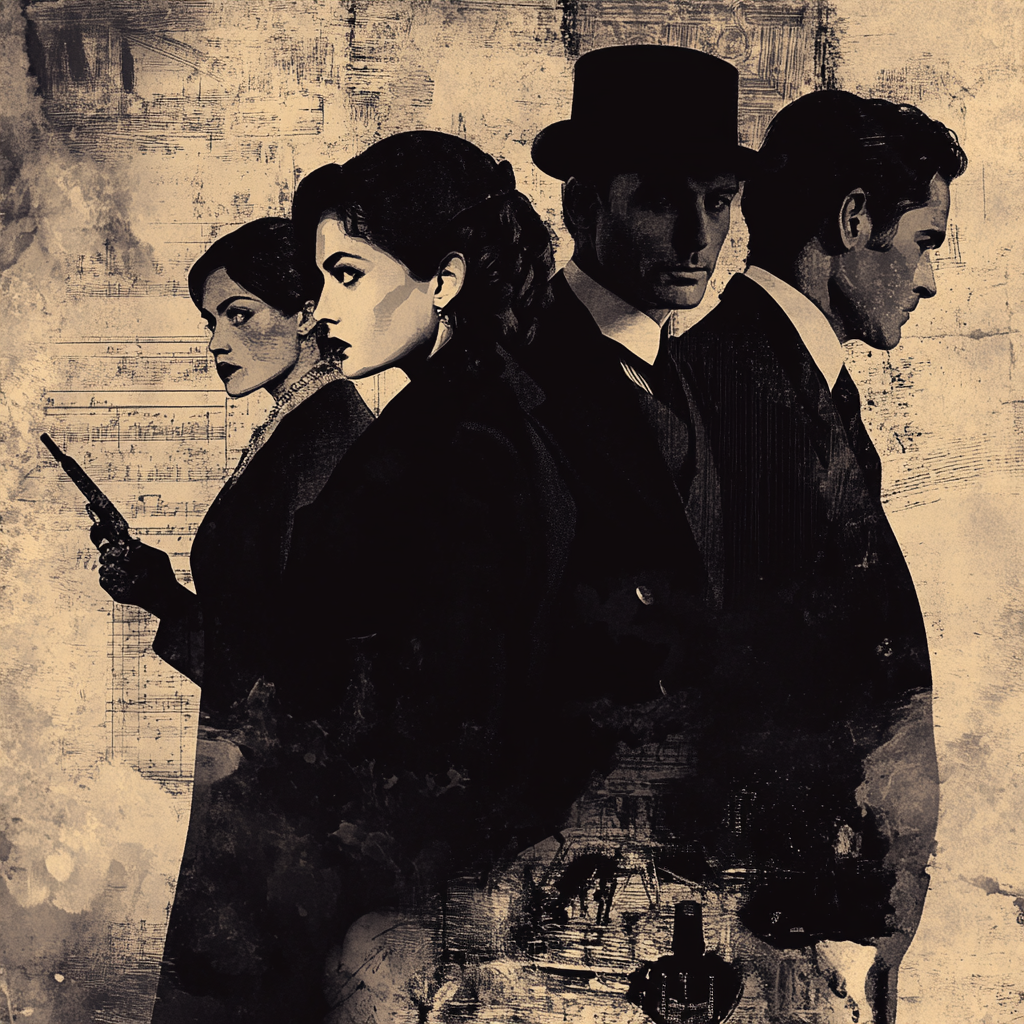
1875 to 2025: 150 Years of Murder Mystery, How It Began and Why It Became Popular
Murder mysteries have been a popular choice for stories, plays and game for centuries, they are full of suspense, can create some intellectual challenges and the satisfaction of uncovering secrets and solving a crime. The murder mystery genre has evolved dramatically since the late 19th century. In this blog, we explore the journey of the murder mystery from its historic origins to its global popularity in present day.
The Genesis of the Murder Mystery (Pre-1875)
Although the genre as we know it began in the 19th century, (with the eccentric detective in the deerstalker created by Sir Arthur Conan Doyle) storytelling involving crime and mystery has ancient more roots. An early example is Sophocles’ Oedipus Rex, which features a complex investigation into a wilful murder.
However, the foundations of the modern murder mystery were laid before Sir Arthur Conan Doyle came along. Edgar Allan Poe is often credited as the original creator of the detective story with The Murders in the Rue Morgue (1841), introducing his analytical sleuth, C. Auguste Dupin. Said to be the inspiration for Doyle’s Sherlock Holmes.
The Birth of the Golden Age (1875–1945)
Sir Arthur Conan Doyle first introduced us to Sherlock Holmes in 1887 when he published A Study in Scarlet and readers loved it. He followed it with A Sign of the Four in 1890 and proceeded to create several novels and short stories featuring his brilliant investigator. Sherlock Holmes solidified the template for the classic detective: a keen observer, logical thinker, and charismatic figure capable of solving even the most complicated of cases.
The early 20th century ushered in the Golden Age of detective fiction, writers like Agatha Christie created the characters, Hercule Poirot and Miss Marple, which quickly became household names, and her novel The Murder of Roger Ackroyd (1926) famously redefined narrative conventions with its unexpected twist. She established the “whodunit” formula, focusing on intricate plots, red herrings, and a satisfying resolution where justice prevails (sometimes).
During this era, murder mysteries were escapism for a public grappling with the aftermath of World War I and the economic challenges of the Great Depression. Readers sought the comfort of order restored by a detective’s brilliance, and the genre’s popularity soared.
The Post-War Boom (1945–1970)
After World War II, the murder mystery evolved to reflect shifting cultural landscapes. While the Golden Age focused on logic and resolution, post-war authors delved into the more psychological and societal aspects of crime. Raymond Chandler and Dashiell Hammett brought a gritty realism to the genre with their hard-boiled detectives, such as Philip Marlowe and Sam Spade. These characters navigated morally ambiguous worlds where justice was not always clear-cut.
And then we get the rise of the Murder mystery game! Although murder mystery games as a parlour activity at a dinner party were mentioned in the works of Agatha Christie, the first commercially successful murder mystery game was Cluedo (or Clue in North America). This was released in 1949. It introduced the concept of solving a fictional murder through deduction as a fun activity.
The 1950s and 1960s saw murder mysteries expand into other media. Alfred Hitchcock’s films, including Rear Window (1954) and Psycho (1960), turned the genre into a cinematic spectacle. Hitchcock’s use of suspense demonstrated that murder mysteries could provoke emotional and psychological reactions, cementing the genre’s place in cinema.
Television embraced crime dramas, with series like Perry Mason and Columbo introducing audiences to sleuths who captivated viewers weekly. These programmes made detective stories a staple of family entertainment.
Diversification and Innovation (1970–2000)
As society grew more diverse, so too did the murder mystery genre. Authors like Ruth Rendell and P.D. James explored psychological depth, crafting stories where the motivations and inner lives of both victims and perpetrators took centre stage.
The late 20th century also saw an advance in technology, this transformed storytelling. For instance, DNA evidence and advanced forensics became pivotal in crime novels. This period saw the rise of the procedural, dramas which delved into the science of solving murders. These novels satisfied an audience increasingly fascinated by the mechanics of modern-day crime-solving, reflecting society’s growing trust in science and technology. While films like The Silence of the Lambs (1991) and Seven (1995) and pushed boundaries with their dark, psychological explorations of crime. Murder mystery dinner parties, in particular, became a cultural phenomenon during the 1980s, allowing participants to take on characters and solve fictional crimes in a social setting.
Murder Mystery in the Digital Age (2000–2025)
The 21st century ushered in a digital revolution, reshaping how audiences consumed murder mysteries. Streaming platforms and podcasts brought crime stories to a global audience. The genre also adapted to new technologies. Interactive murder mystery video games, such as L.A. Noire allowed players to take on the role of detectives, actively engaging in solving crimes. Social media enabled fans to discuss theories and dissect plotlines in real time and share shows and games they’ve enjoyed.
Authors like Gillian Flynn (Gone Girl) and Paula Hawkins (The Girl on the Train) brought unreliable narrators and psychological twists to the forefront, captivating modern audiences. Meanwhile, the genre embraced inclusivity, featuring detectives from diverse backgrounds and stories set in underrepresented communities.
True crime documentaries and dramatizations have further enhanced the genre’s reach, attracting viewers who might not have engaged with traditional mystery novels.
Why Are Murder Mysteries So Popular?
Murder mysteries offer readers and viewers the chance to play detective, piece together clues and test their deductive reasoning. This interactive element creates a sense of satisfaction when the mystery is solved. Now murder mysteries can be tailored to reflect any era, setting, or cultural context. From Victorian manors to futuristic cities, the genre evolves with the times. Detectives, whether eccentric geniuses like Holmes and Poirot or relatable figures like Vera Stanhope and Miss Marple, have become beloved icons.
Conclusions
From the foggy streets of Victorian London to the streaming platforms of today, murder mysteries have captivated audiences for many years. As we mark 150 years of murder mystery in 2025, we celebrate a genre that has entertained generations of amateur sleuths. If you fancy playing detective yourself, you can host your own murder mystery at home. Our Sherlock Holmes murder mystery game kit even hands you the deerstalker for the evening. Murder mysteries, it seems, will continue to enthral us for many years to come.

Share:
Tips and Tricks for a Stress-Free Murder Mystery Dinner Party
Murder Mystery Dinner Party Games: The Ultimate Guide to an Unforgettable Mystery Night