

Cold Case Unit · The Case Portal
The case file that talks back.
Every cold case comes with its own investigation portal. Play the tapes, work the terminals, question the record — and when you're sure, put your verdict on the board.
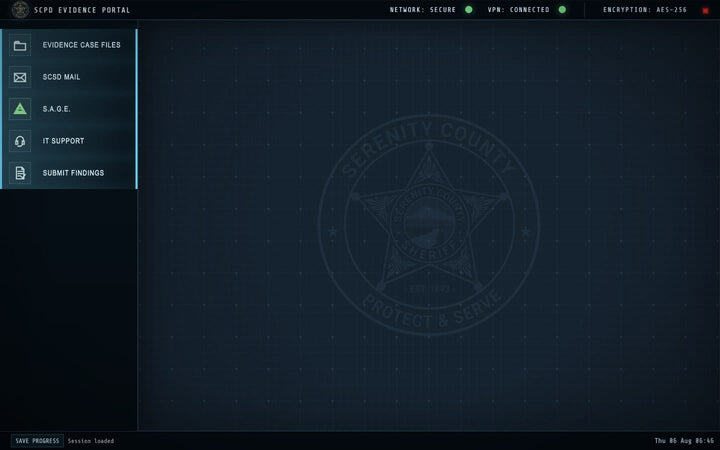
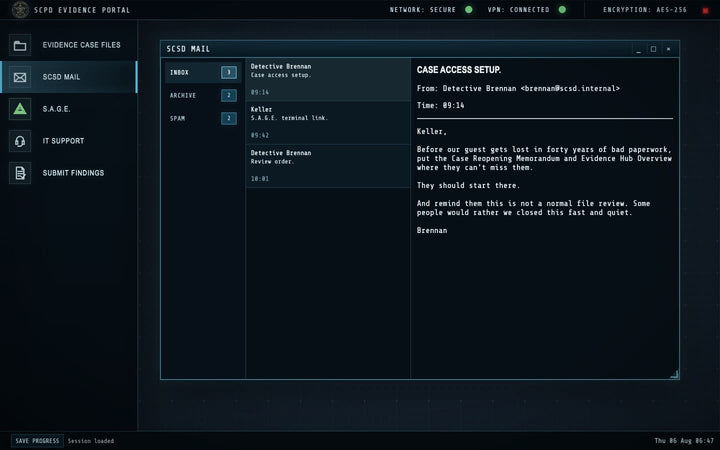

How the investigation unfolds
Paper on the desk. A precinct behind the glass.
This isn't a folder of files — it's a working investigation. Here's what opens when you sign in.
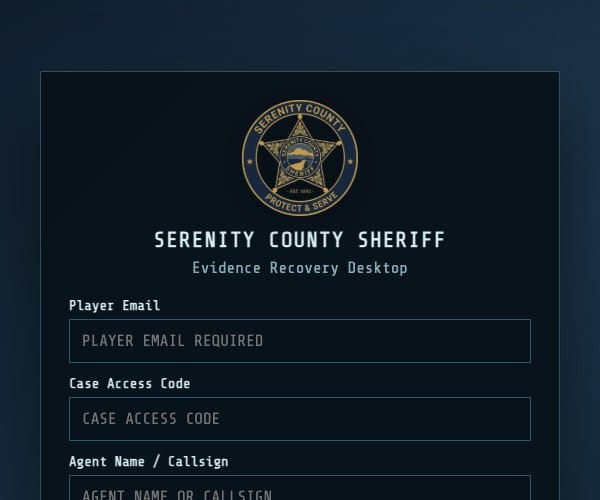
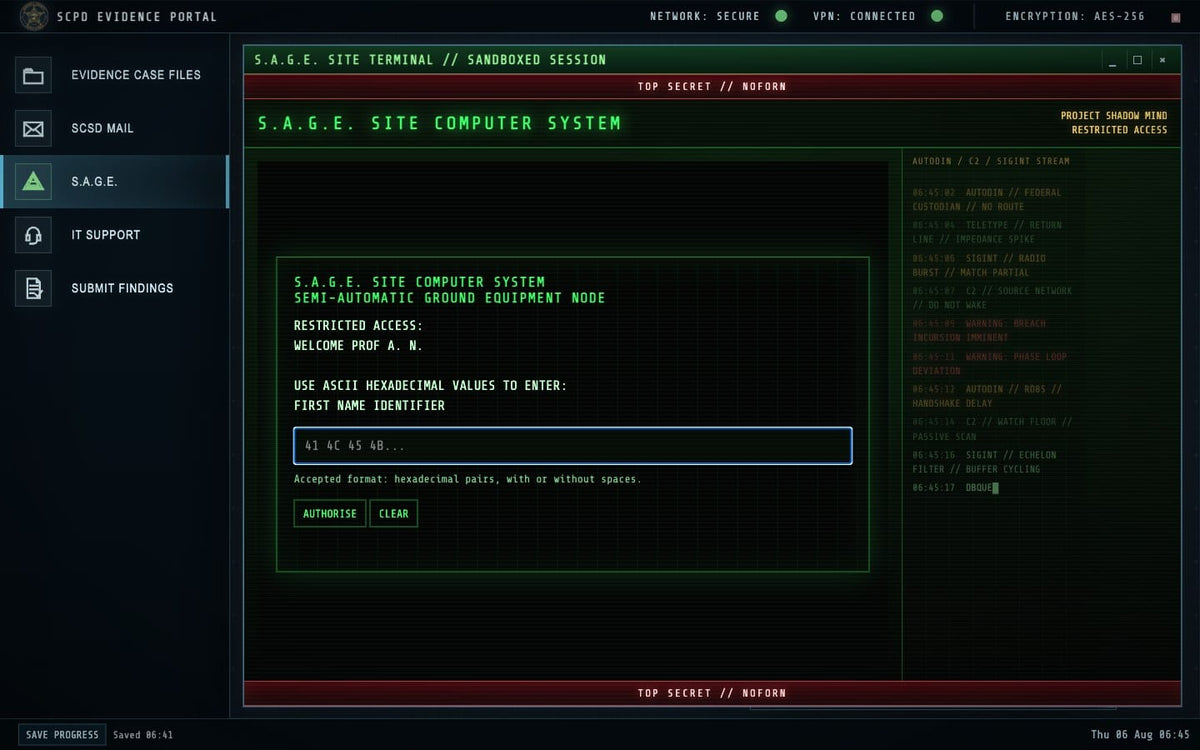
Your case code opens the file
Every investigation comes with its own access code. Sign in with a detective alias and the precinct opens your case — no app store, no passwords, just the file.
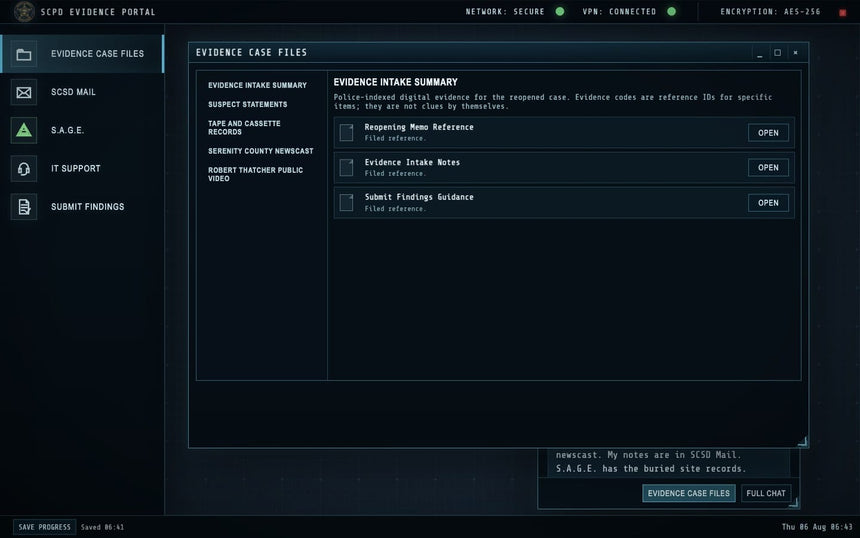
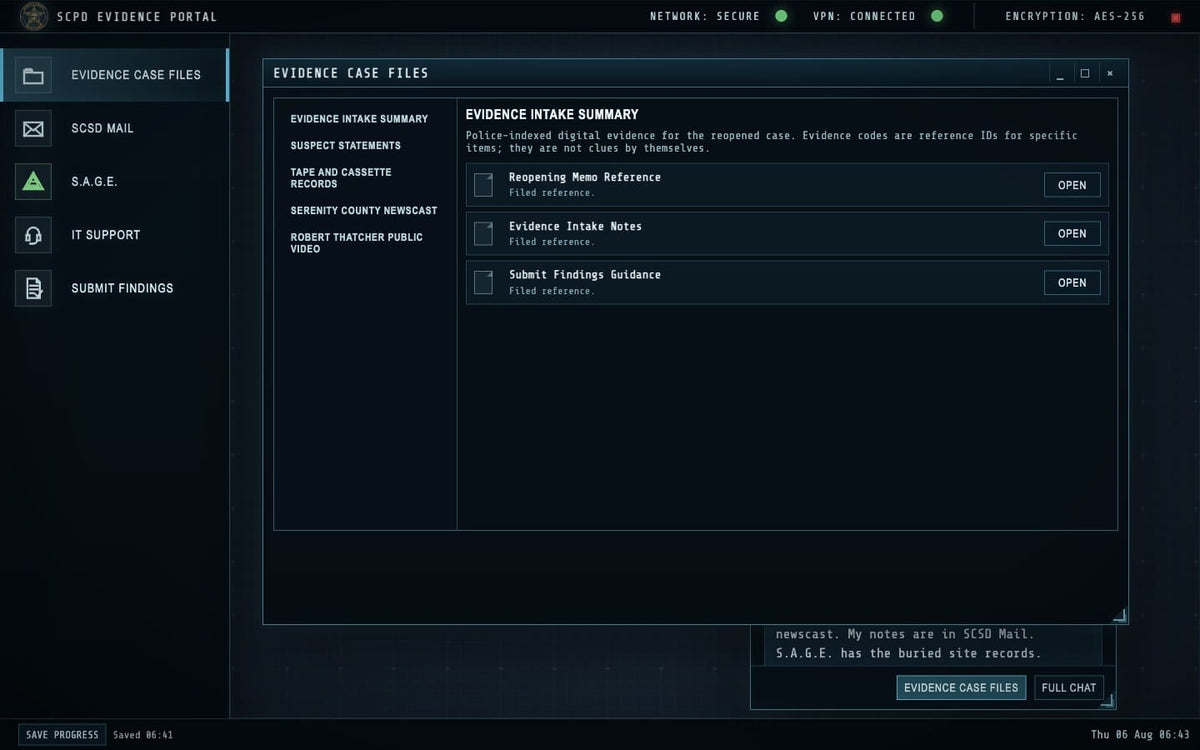
Tapes, statements, newscasts — indexed like a real intake room
Statements to read, cassette records to play, news footage to study. Every item carries its own evidence code, filed the way a precinct would file it.
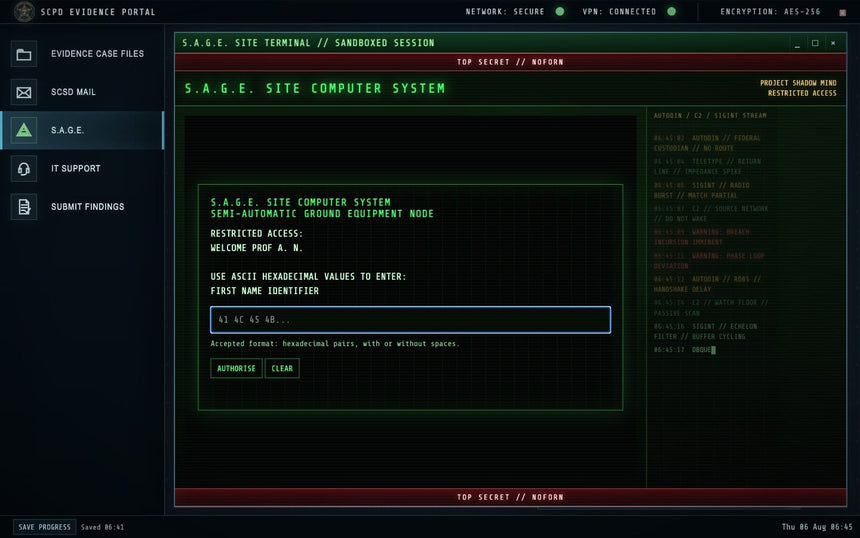
Mail, terminals — and people who answer
Dig through the department's mail, take a briefing from digital forensics on a secure feed, and crack a restricted mainframe that was never meant for your clearance.
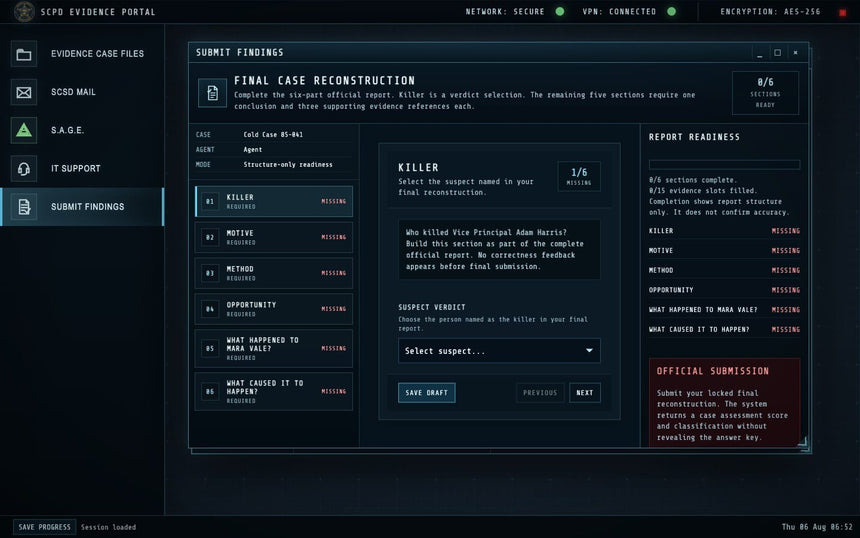
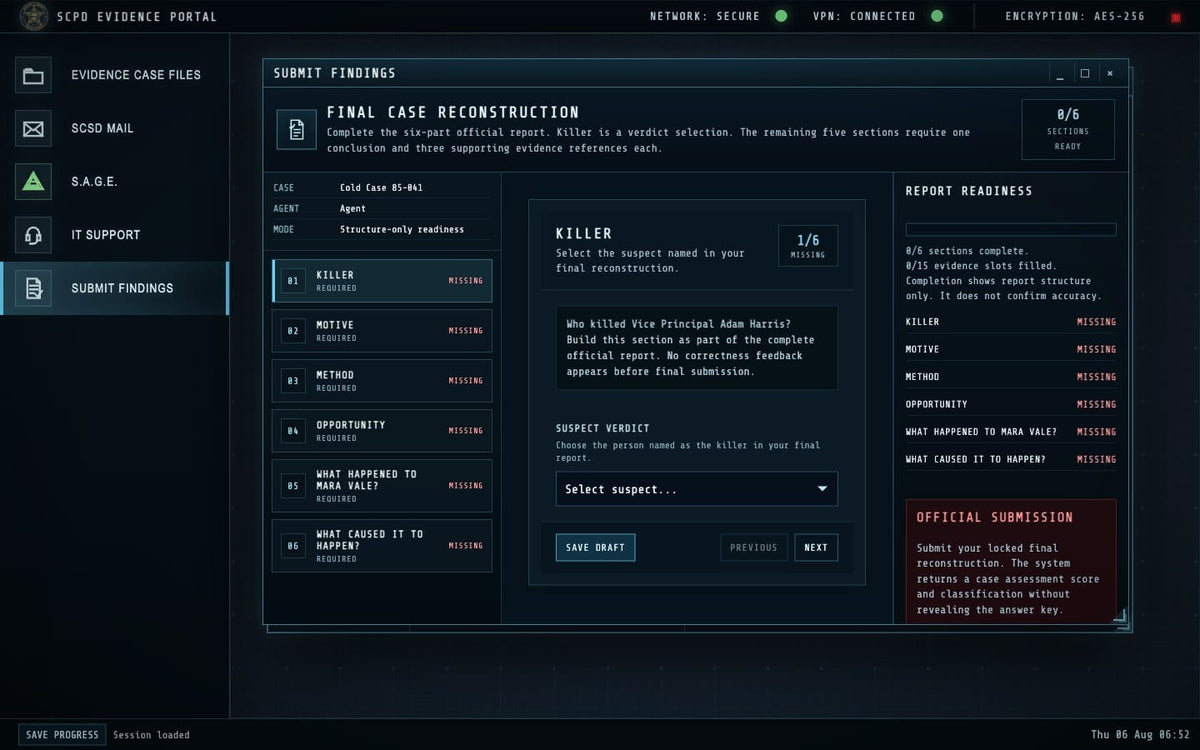
Put your name on the official report
When you're sure, build the final reconstruction — killer, motive, method, opportunity — and commit it. Every file ends in a verdict; the newest cases grade your whole reconstruction and hand down a classification. No answer key leaks first.
One case · two surfaces
The desk holds the paper. The screen holds the rest.
A cold case isn't read — it's worked. The portal carries everything paper can't.
On the desk · The dossier
Evidence you can hold
- Statements and photographs spread across the table
- Documents to mark, sort and argue over
- The case file itself — the kind you close with a thud
- And margins for your own theories
On the screen · The living case
Evidence that answers back
- Tapes and news footage that play
- Terminals that only open when you crack them
- A precinct that emails you back — check the spam folder
- A verdict graded without spoiling the answer
Digital cases open the entire dossier on screen. Boxed cases put the paper in your hands, with the portal alongside. Same precinct either way.
Before you ask
Questions, answered.
Which games use the portal?
Cold case files, online escape rooms and hybrid investigations like Play Bckwards. Dinner party murder mysteries have their own app — built for a table full of suspects.
What does it cost?
Nothing. Portal access is part of the game — no subscription, no extra unlock.
How long does my access last?
It doesn't expire. Your case code stays good — solve it this weekend or in a year, the file will be waiting.
I bought the boxed edition — do I still use the portal?
Yes. The documents stay in your hands, and the portal carries what paper can't — the tapes, the terminals and the verdict.
Do I need to install anything?
No. The portal runs in any browser on a laptop, tablet or phone. Your case access code and email sign you in.
How many detectives can play?
Cold case files are built for one or two investigators — a perfect date night with a body count. Online escape rooms play with teams of up to six.
What if we get stuck?
The precinct's IT Support desk sits right in the portal's sidebar — and a real human team is on hand before, during and after game night.
Does my progress save?
Automatically. Close the file tonight, sign back in with your code, and the case opens exactly where you left it.
Is my verdict actually scored?
Cases end with a verdict you commit inside the portal — and the newest files grade your full reconstruction section by section, with the answer sealed until you do.
Reopen a case tonight.
Pick your unsolved file — or an online escape room — and the portal opens the moment you do.